The last week of September looked as if it would be normal for local municipal workers.
Work Thursday and Friday followed by the weekend and returning to the office on Monday.
It should have been a normal week. Although Arenillas was in the middle of fiestas, there were no planned days off because the biggest days of the celebration fell on Saturday and Sunday.
Instead of a normal week, they put in a half day's work over the five-day period. Let me explain.
Thursday morning was the police strike. Everyone left the office and took the afternoon off.
Friday morning, everyone showed up a little late unsure of what would happen the day after the police strike. After lunch, the city hall was closed because of municipal worker soccer matches between the city council, the municipal workers union, the contracted municipal employees, and the drivers union.
Saturday and Sunday were a weekend.
Monday was a hangover day so that everyone could recover from his or her fiesta rowdiness. All city offices were closed.
That is how one transforms a two-day weekend into a four-and-a-half-day weekend. If you want to take into the account the civil unrest on Thursday and not count that as part of the weekend, you have an unplanned three-and-a-half-day weekend and that half day of work started late and ended early to prepare for the soccer matches.
Monday, October 11, 2010

Saturday, October 09, 2010
I sure hope I don't have to go through that again
Before I continue with the blog post, I'll just let you know that everything in my town stayed relatively calm throughout the protests last Thursday. Although most of the activity was concentrated in the major cities, the entire country was on edge. Tensions have eased, and normalcy has returned.
Last Thursday was supposed to be a normal Thursday. I had a full day of work planned. When I left for work in the morning, I was focused on collecting seeds for the tree nursery. When I got home for lunch, I wondered about the stability of society. And just as quickly as my thoughts escalated, I went to bed Thursday night and woke up to a town that showed little evidence of the national crisis it had faced the day before.
No pasa nada, right?
Not quite.
One of my main projects right now is reforesting the local watershed with 250,000 plants. I like to stress the importance of planting native species to protect the area's biodiversity. Since almost all primary forest has been converted to agricultural use, the largest remaining forest in the area is the local ecological reserve, which is run by the Ecuadorian military.
Now is the season when most species in the area go to flower and give off seeds. I have been trying to coordinate seed collection with the ecological reserve for several months. Like any effort to deal with a large bureaucracy, even trying to do a small amount of work requires a large amount of time and paperwork and frustration.
In the course of this process, they had relocated the ecological base and changed commanding officers. But after months of trying, we had finally arranged to go the reserve on Thursday morning.
We were going to meet at the municipality at 9:00 a.m. and go to the reserve from there. When I arrived, I glanced at the news on the TV and saw some demonstrations but didn't really pay close attention. There are always demonstrations of one sort or another, so I didn't really look to see what was going on.
The army arrived at 9:30 a.m., and we set off for the reserve.
The trail that we used for seed collection is deep in the forest. There is limited cell reception. The entire horizon is covered by dense brush. You feel completely separated from civilization.
As we continued along the trail, they received radio transmissions updating them about the escalating situation. I wasn't in earshot of the radio. All I could pick up was their reaction to each update.
With each message the strike's severity became more clear.
We continued with our seed collection because they didn't have orders to do otherwise. But on the ride back to town, there was an air of doubt and uncertainty about what would happen next.
They were talking about the looting and bank robberies that were occurring because the police were not enforcing the law. Some wondered what this meant for the government's stability.
We got back around 1:30, dropped off the seeds at the tree nursery, and bid each other farewell. We said that we would do another seed collection run in a month or so, but given the country's current situation it seemed silly to be planning so far ahead.
I went home for lunch. On my way home, I called another volunteer to find out what was going on. At this point in the day, the police strikes were the big news.
I went home to learn more and parked myself on my neighbor's couch in front of his TV. As the afternoon wore on, there wasn't much new news coming out. A group of people marched through town cheering support of the government, and some of my neighbors played a war drum all day (I think they were practicing for the high school marching band, but the drum definitely made it seem that much more suspenseful).
I watched the news all afternoon and night until I went to bed. At that point, the president was still in the hospital.
When I woke up at 5:30, the first thing I did was check the news. I read about the daring police raid that freed the president and about his address to the country upon his liberation. It was still dark out at this time.
I didn't know how my town would respond to the situation. Would everyone stay inside and reflect on what had happened the last day? Would they go about their lives as normal? Would they just take the day off?
Life just went on.
At about 6:00, the morning milk man passed by. A few minutes later, the boiled corn and humitas saleswoman came through. Then, it was the fresh fish guy.
Aside from the fact that the schools were out and the military was patrolling the streets instead of the cops, life was normal. I went into the municipal office later in the day, and everybody had recovered.
All the talk was about that night's beauty pageant and the weekend's fiestas. Nobody was dwelling on the police strike.
Last Thursday was supposed to be a normal Thursday. I had a full day of work planned. When I left for work in the morning, I was focused on collecting seeds for the tree nursery. When I got home for lunch, I wondered about the stability of society. And just as quickly as my thoughts escalated, I went to bed Thursday night and woke up to a town that showed little evidence of the national crisis it had faced the day before.
No pasa nada, right?
Not quite.
One of my main projects right now is reforesting the local watershed with 250,000 plants. I like to stress the importance of planting native species to protect the area's biodiversity. Since almost all primary forest has been converted to agricultural use, the largest remaining forest in the area is the local ecological reserve, which is run by the Ecuadorian military.
Now is the season when most species in the area go to flower and give off seeds. I have been trying to coordinate seed collection with the ecological reserve for several months. Like any effort to deal with a large bureaucracy, even trying to do a small amount of work requires a large amount of time and paperwork and frustration.
In the course of this process, they had relocated the ecological base and changed commanding officers. But after months of trying, we had finally arranged to go the reserve on Thursday morning.
We were going to meet at the municipality at 9:00 a.m. and go to the reserve from there. When I arrived, I glanced at the news on the TV and saw some demonstrations but didn't really pay close attention. There are always demonstrations of one sort or another, so I didn't really look to see what was going on.
The army arrived at 9:30 a.m., and we set off for the reserve.
The trail that we used for seed collection is deep in the forest. There is limited cell reception. The entire horizon is covered by dense brush. You feel completely separated from civilization.
As we continued along the trail, they received radio transmissions updating them about the escalating situation. I wasn't in earshot of the radio. All I could pick up was their reaction to each update.
With each message the strike's severity became more clear.
We continued with our seed collection because they didn't have orders to do otherwise. But on the ride back to town, there was an air of doubt and uncertainty about what would happen next.
They were talking about the looting and bank robberies that were occurring because the police were not enforcing the law. Some wondered what this meant for the government's stability.
We got back around 1:30, dropped off the seeds at the tree nursery, and bid each other farewell. We said that we would do another seed collection run in a month or so, but given the country's current situation it seemed silly to be planning so far ahead.
I went home for lunch. On my way home, I called another volunteer to find out what was going on. At this point in the day, the police strikes were the big news.
I went home to learn more and parked myself on my neighbor's couch in front of his TV. As the afternoon wore on, there wasn't much new news coming out. A group of people marched through town cheering support of the government, and some of my neighbors played a war drum all day (I think they were practicing for the high school marching band, but the drum definitely made it seem that much more suspenseful).
I watched the news all afternoon and night until I went to bed. At that point, the president was still in the hospital.
When I woke up at 5:30, the first thing I did was check the news. I read about the daring police raid that freed the president and about his address to the country upon his liberation. It was still dark out at this time.
I didn't know how my town would respond to the situation. Would everyone stay inside and reflect on what had happened the last day? Would they go about their lives as normal? Would they just take the day off?
Life just went on.
At about 6:00, the morning milk man passed by. A few minutes later, the boiled corn and humitas saleswoman came through. Then, it was the fresh fish guy.
Aside from the fact that the schools were out and the military was patrolling the streets instead of the cops, life was normal. I went into the municipal office later in the day, and everybody had recovered.
All the talk was about that night's beauty pageant and the weekend's fiestas. Nobody was dwelling on the police strike.
Thursday, September 30, 2010
A disturbing story from the newspaper
While reading the newspaper a few weeks ago, I came across a very troubling story. If you would like the Spanish version, you can find it here. If your Spanish isn't strong enough, don't worry. I paraphrase it below.
Headline: They took him from downtown to leave him in a landfill
German, a 72-year old homeless man, was living on the streets of downtown Machala. He had been living this way for many years. One day, a few weeks back, a municipal employee put German in a city car and told German "I'm taking you to a better place." He actually just drove him to middle of some banana fields on the outskirts of town and left him in a pile of garbage.
German pleaded with the workers and asked them how he would get back to the city. They just drove away.
Not knowing what to do next, he stayed in that spot for several hours. Eventually a police car stopped. He asked them to take back to the city but they refused. Instead, they just dropped him at the outskirts of another outlying neighborhood.
The municipal worker who initially "relocated" German to the banana fields said he didn't want the homeless person "affecting the decoration or revitalization of the city." The city worker continued "we don't have the intention to do harm to nobody. ... Machala doesn't have indigents that are from Machala. They are always from other places." He said that he planned on dropping the homeless man in El Guabo or Huaquillas or some other town so that he wouldn't hurt the image of Machala.
Once he was discovered on the outskirts of town, German was taken in by social services. He was given a shower and a hot meal at a city councilman's house before heading off to a hospital and then on to a senior citizen's facility.
The city worker who decided to leave the man in the banana fields was suspended for one month without pay, and his actions were condemned by the municipality. I heard one report that said he carried out the act because he had not been paid for several months.
Headline: They took him from downtown to leave him in a landfill
German, a 72-year old homeless man, was living on the streets of downtown Machala. He had been living this way for many years. One day, a few weeks back, a municipal employee put German in a city car and told German "I'm taking you to a better place." He actually just drove him to middle of some banana fields on the outskirts of town and left him in a pile of garbage.
German pleaded with the workers and asked them how he would get back to the city. They just drove away.
Not knowing what to do next, he stayed in that spot for several hours. Eventually a police car stopped. He asked them to take back to the city but they refused. Instead, they just dropped him at the outskirts of another outlying neighborhood.
The municipal worker who initially "relocated" German to the banana fields said he didn't want the homeless person "affecting the decoration or revitalization of the city." The city worker continued "we don't have the intention to do harm to nobody. ... Machala doesn't have indigents that are from Machala. They are always from other places." He said that he planned on dropping the homeless man in El Guabo or Huaquillas or some other town so that he wouldn't hurt the image of Machala.
Once he was discovered on the outskirts of town, German was taken in by social services. He was given a shower and a hot meal at a city councilman's house before heading off to a hospital and then on to a senior citizen's facility.
The city worker who decided to leave the man in the banana fields was suspended for one month without pay, and his actions were condemned by the municipality. I heard one report that said he carried out the act because he had not been paid for several months.
Sunday, September 26, 2010
¡Happy Flag Day!
On this day in 1860, the color scheme for the Ecuadorian flag was officially adopted. To this day, September 26th is an important one in the national calendar.
Every school holds a formal ceremony called Juramento a La Bandera ("Swearing to the flag"). During the ceremony, the students in the oldest grade swear allegiance to the flag. Various speakers explain the significance of each color band. Take note that the yellow band on the flag is twice as wide as the other ones.
Yellow represents the country's natural wealth. Blue represents the ocean (and the sky). Red represents the blood and sacrifices made in the country's fight for freedom.

In the weeks leading up to the ceremony, the students practice marching so that they can get the steps down in time for the big day. And the job of holding the flag is a coveted one. The responsibility is given to the student with the highest grades (a kind of valedictorian, if you will).

Now, to finish the narrative of the Ecuadorian flag. If you look at the official flag, it doesn't just contain the three color bands. It also has a seal in the middle. This was added in the year 1900. To my knowledge, there is no holiday to commemorate the adoption of the seal on the flag.
If the Ecuadorian flag reminds you of the Colombian or Venezuelan flags, that is because they are based on the same design. After Simon Bolivar led the revolutions in South America, the three countries all belonged to the Gran Colombia. As an homage to the revolutionaries who inspired the struggle for independence, the countries adopted designs similar to the flag of Gran Colombia. The differences between the three are that the Ecuadorian flag has the seal of arms, the Venezuelan flag has stars, and the Colombian flag just has the tricolor bands.
Every school holds a formal ceremony called Juramento a La Bandera ("Swearing to the flag"). During the ceremony, the students in the oldest grade swear allegiance to the flag. Various speakers explain the significance of each color band. Take note that the yellow band on the flag is twice as wide as the other ones.
Yellow represents the country's natural wealth. Blue represents the ocean (and the sky). Red represents the blood and sacrifices made in the country's fight for freedom.

In the weeks leading up to the ceremony, the students practice marching so that they can get the steps down in time for the big day. And the job of holding the flag is a coveted one. The responsibility is given to the student with the highest grades (a kind of valedictorian, if you will).
Now, to finish the narrative of the Ecuadorian flag. If you look at the official flag, it doesn't just contain the three color bands. It also has a seal in the middle. This was added in the year 1900. To my knowledge, there is no holiday to commemorate the adoption of the seal on the flag.
If the Ecuadorian flag reminds you of the Colombian or Venezuelan flags, that is because they are based on the same design. After Simon Bolivar led the revolutions in South America, the three countries all belonged to the Gran Colombia. As an homage to the revolutionaries who inspired the struggle for independence, the countries adopted designs similar to the flag of Gran Colombia. The differences between the three are that the Ecuadorian flag has the seal of arms, the Venezuelan flag has stars, and the Colombian flag just has the tricolor bands.
Wednesday, September 22, 2010
Gusanito
We are entering the heart of fiesta season in Arenillas. The neighborhood celebrations are behind us as the entire city unites for its two main parties. This week, the fiestas partronales will kick off. They last for about ten days. Then everybody will spend the next three weeks gearing up for the fiestas de cantonizacion (celebrating the city's birthday), which start at the beginning of November.
The shift to municipal fiestas means a few things:
• Official work gets put on the back burner as the party-planning committee takes over
• Class gets replaced by marching band practice
• Beauty pageant pictures in the newspaper every week
• The arrival of the gusanito

Run by a group of Ecuadorian carnies, the gusanito (literally means "worm") is an amusement ride that appears at fiestas throughout the country. The worm squirms and swerves through the streets, offering the thrill of riding a reggaeton-blasting, light-flashing multipede around town.
It arrives a few days before the party gets going and sets up near the epicenter of fiesta activity. Then it skips town the day after the festivities come to a close. I have actually seen the full gusanito driving down the main coastal highway on its way to another town's fiestas. The image of the carny family, with all of its belongings stored in the various cars of the gusanito on its way to another gig is quite entertaining.
Just as entertaining as it is to see the entire gusanito family rolling down the Ecuadorian equivalent of I-75 is seeing the head car of the gusanito running errands in town. This morning, I caught the gusanito's head at the market.

Although I have yet to experience the thrill of the gusanito first-hand, it on my list of things to do before my service ends. Its location on the to-do list is right between drinking fresh goat milk and midnight fishing in the mangrove.
As we head to the heart of fiesta season, I should get plenty of chances to cross it off my to-do list.
The shift to municipal fiestas means a few things:
• Official work gets put on the back burner as the party-planning committee takes over
• Class gets replaced by marching band practice
• Beauty pageant pictures in the newspaper every week
• The arrival of the gusanito

Run by a group of Ecuadorian carnies, the gusanito (literally means "worm") is an amusement ride that appears at fiestas throughout the country. The worm squirms and swerves through the streets, offering the thrill of riding a reggaeton-blasting, light-flashing multipede around town.
It arrives a few days before the party gets going and sets up near the epicenter of fiesta activity. Then it skips town the day after the festivities come to a close. I have actually seen the full gusanito driving down the main coastal highway on its way to another town's fiestas. The image of the carny family, with all of its belongings stored in the various cars of the gusanito on its way to another gig is quite entertaining.
Just as entertaining as it is to see the entire gusanito family rolling down the Ecuadorian equivalent of I-75 is seeing the head car of the gusanito running errands in town. This morning, I caught the gusanito's head at the market.

Although I have yet to experience the thrill of the gusanito first-hand, it on my list of things to do before my service ends. Its location on the to-do list is right between drinking fresh goat milk and midnight fishing in the mangrove.
As we head to the heart of fiesta season, I should get plenty of chances to cross it off my to-do list.
Monday, September 20, 2010
For $4.35 today at the market ....
Four pounds of sweet potato
Four pounds of yucca
Two pounds of tomato
Two pounds of red onion
Two cucumbers
Four lemons
Two cloves of garlic
How much would that run me in the States?
Four pounds of yucca
Two pounds of tomato
Two pounds of red onion
Two cucumbers
Four lemons
Two cloves of garlic
How much would that run me in the States?
Sunday, September 12, 2010
It's hard to get a good knish in Arenillas
Unless you make it yourself.

Last week, I made my first foray into the world of flaky dumplings. I, and my stomach, would call knish night quite successful. I think we'll do it again soon.

Last week, I made my first foray into the world of flaky dumplings. I, and my stomach, would call knish night quite successful. I think we'll do it again soon.
Friday, September 10, 2010
Trapped
When I arrived at the all girls elementary school a couple of days ago for an AREvista meeting, there was quite a bit of commotion.
In contrast to the boys elementary school down the street, things at the girls school are much more disciplined. But when I walked in, the girls were out of their classroom.
That's because they couldn't get in their classroom.
Before the school day began, some of the early-arriving students were horsing around. In the course of their playing, they slammed the door to their classroom shut. The janitor came by with the key to open the door, but the key broke, trapping for girls in the room.
Apparently, there is only one copy of the key. And there is no other way out of the room, as the windows are surrounded by steel bars.
The four students were locked in the room for two and half hours until the locksmith came by.
Immediately upon being let out, they all ran to the bathroom.
In contrast to the boys elementary school down the street, things at the girls school are much more disciplined. But when I walked in, the girls were out of their classroom.
That's because they couldn't get in their classroom.
Before the school day began, some of the early-arriving students were horsing around. In the course of their playing, they slammed the door to their classroom shut. The janitor came by with the key to open the door, but the key broke, trapping for girls in the room.
Apparently, there is only one copy of the key. And there is no other way out of the room, as the windows are surrounded by steel bars.
The four students were locked in the room for two and half hours until the locksmith came by.
Immediately upon being let out, they all ran to the bathroom.
Monday, September 06, 2010
Where is Hank Hill?
To refill my kitchen gas tank only costs $1.60. But that only takes into account the monetary value the Ecuadorian government places on its heavily subsidized gas.
That $1.60 doesn't take into account headaches, frustration, cold meals, and lost time involved in navigating this bureaucratic nightmare.
My gas tank ran out three weeks ago. I finally got a refill a couple of days ago.
(To go directly to my struggles in replacing the gas tank, skip the next two paragraphs)
Gas tanks are a very heavily regulated industry in Ecuador for a variety of reasons. Although Ecuador is an OPEC nation, it doesn't have sufficient refining capacity to serve the needs of its citizens. So, most of the cooking gas tank gas is imported. Apparently there is some kind of issue with the shipments now because there are gas shortages throughout the country.
The other problem is much more local. Ecuador subsidizes the gas tank prices. Peru doesn't subsidize (or doesn't subsidize as much). This creates an arbitrage opportunity for people who live near the border. The government has tried to crack down on this by placing the military in charge of gas distribution and making sure that each gas purchase is officially registered so that no one is stockpiling.
When my gas tank ran out, I went to the local gas distributor to change the tanks, but they were closed. I tried this the next day, but it was the same story.
In the meantime, one of my neighbors let me borrow his gas tank.
On my third attempt, they told me that they were out of gas, but that I should come back the next day with my gas tank and a copy of my ID.
I did that, except they were already out of gas by the time I arrived.
So on my fifth attempt, the stars finally appeared to have aligned. I had my ID. They had gas tanks. When it was my turn in line, they asked me for something that would certify me as a resident of Arenillas. I showed them my ID. They said it wasn't good enough. I had to go to the local government office and get a signed document, attesting to my residence.
I go to the office, but they tell me that they can't do anything for me until the president of my neighborhood certifies me as a resident.
The president of my neighborhood is a doctor who practices in another city. He doesn't get back to Arenillas until 7:00 p.m., which is about when I get to his house.
He says that he'd like to help but he needs the secretary of the neighborhood to prepare the document.
I head to her house. She works in another city and doesn't get home until 10:30, which is well past my bed time. I leave my papers at her house and pick them up in the morning.
I pick up the papers and notice that the secretary had forgotten to sign them. I get the president's signature that night and leave the document at the secretary's house to pick it up the next day and take it over to the government office.
Unfortunately, the government's representative was out of the office. I would have to wait over the weekend. Monday morning, I swung by the government office, picked up the paper I need, and headed to the gas distributor. Much to my surprise, they had gas.
I paid the $1.60 and changed my tank. Now was that so hard?
That $1.60 doesn't take into account headaches, frustration, cold meals, and lost time involved in navigating this bureaucratic nightmare.
My gas tank ran out three weeks ago. I finally got a refill a couple of days ago.
(To go directly to my struggles in replacing the gas tank, skip the next two paragraphs)
Gas tanks are a very heavily regulated industry in Ecuador for a variety of reasons. Although Ecuador is an OPEC nation, it doesn't have sufficient refining capacity to serve the needs of its citizens. So, most of the cooking gas tank gas is imported. Apparently there is some kind of issue with the shipments now because there are gas shortages throughout the country.
The other problem is much more local. Ecuador subsidizes the gas tank prices. Peru doesn't subsidize (or doesn't subsidize as much). This creates an arbitrage opportunity for people who live near the border. The government has tried to crack down on this by placing the military in charge of gas distribution and making sure that each gas purchase is officially registered so that no one is stockpiling.
When my gas tank ran out, I went to the local gas distributor to change the tanks, but they were closed. I tried this the next day, but it was the same story.
In the meantime, one of my neighbors let me borrow his gas tank.
On my third attempt, they told me that they were out of gas, but that I should come back the next day with my gas tank and a copy of my ID.
I did that, except they were already out of gas by the time I arrived.
So on my fifth attempt, the stars finally appeared to have aligned. I had my ID. They had gas tanks. When it was my turn in line, they asked me for something that would certify me as a resident of Arenillas. I showed them my ID. They said it wasn't good enough. I had to go to the local government office and get a signed document, attesting to my residence.
I go to the office, but they tell me that they can't do anything for me until the president of my neighborhood certifies me as a resident.
The president of my neighborhood is a doctor who practices in another city. He doesn't get back to Arenillas until 7:00 p.m., which is about when I get to his house.
Ian: Necesito un certificado que dice que vivo en esta ciudadela para que pueda conseguir un tanque de gas.
Presidente: Mejor que consigas algunas peladas.
(or for the direct translation)
Ian: I need to get a certificate that says I live here so I can get a gas tank.
Prez: Better that you get yourself a couple of broads.
He says that he'd like to help but he needs the secretary of the neighborhood to prepare the document.
I head to her house. She works in another city and doesn't get home until 10:30, which is well past my bed time. I leave my papers at her house and pick them up in the morning.
I pick up the papers and notice that the secretary had forgotten to sign them. I get the president's signature that night and leave the document at the secretary's house to pick it up the next day and take it over to the government office.
Unfortunately, the government's representative was out of the office. I would have to wait over the weekend. Monday morning, I swung by the government office, picked up the paper I need, and headed to the gas distributor. Much to my surprise, they had gas.
I paid the $1.60 and changed my tank. Now was that so hard?
Sunday, September 05, 2010
Hey, prehistoric forest
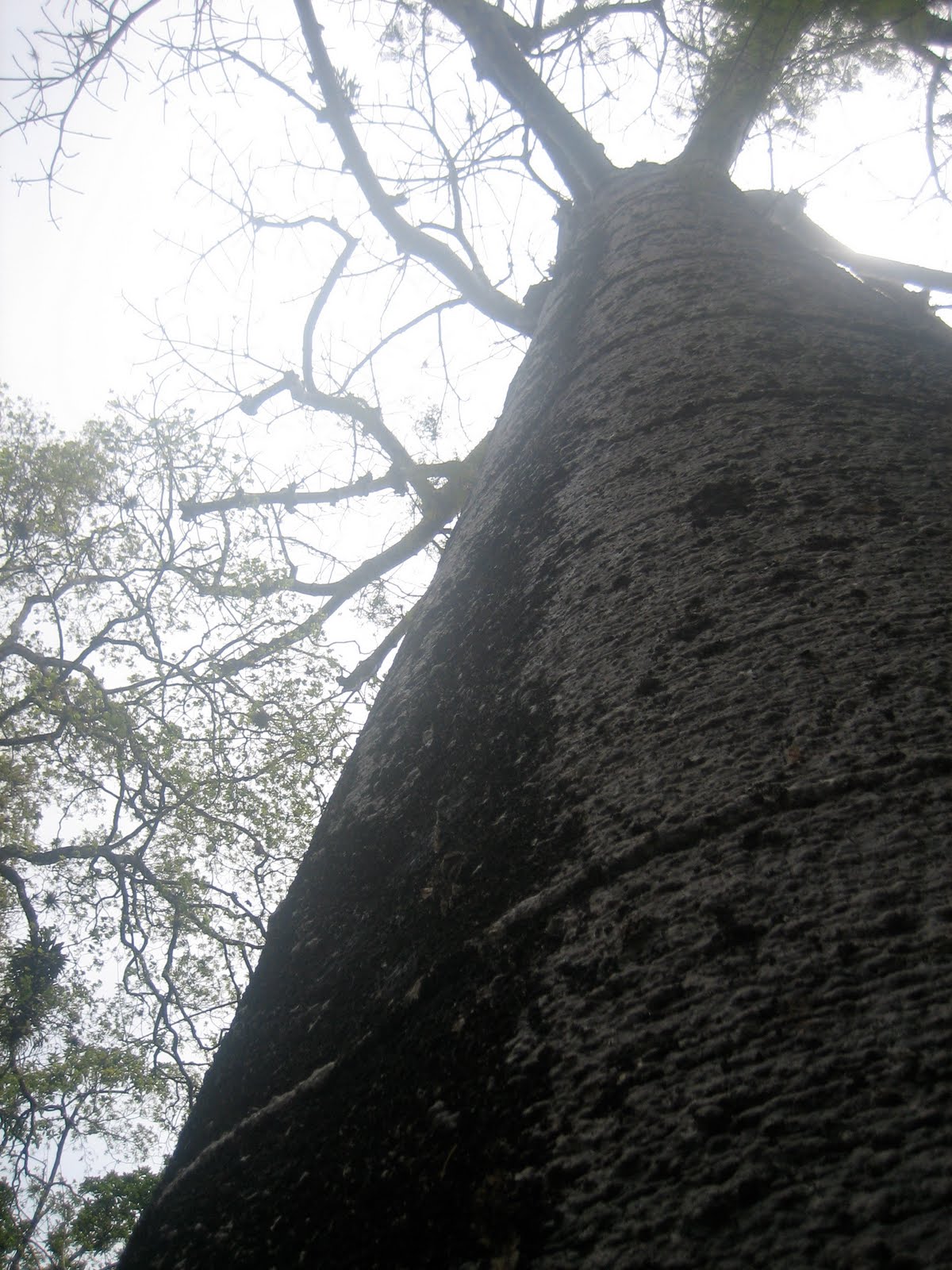
Yesterday, I took a trip up to the Puyango Petrified Forest. It contains one of the largest collections of petrified wood in the world and is just a couple of hours from my site.
Obviously, I had to go check it out at some point. But knowing that it's been there for millions years and probably wasn't going to change too much in my two years here, I was in no particular rush to get out there.
But it was definitely worth the visit.
The wood in the forest is between 60 million to 120 million years old. Petrified wood is fossilized wood. As the tour guide tried to explain to me: The lava flow from volcanic activity at the time (There's no active volcanoes in the vicinity. Don't worry, mom.) covered the forests. The lava buried the trees, and all the organic matter in the trees was converted into petrified wood. At one point in its history, the area was also covered by ocean because there are shellfish fossils.
The largest piece in the forest is this fifteen meter trunk that has naturally broken into several pieces.

It should be mentioned that the forest has only been a protected area for about twenty years now. Before it was declared a protected area, there was quite a bit of pillaging that occurred. Many residents in the area, and some in my site, have pieces of the petrified wood in their homes.
In addition to the petrified wood, the park also contains some pristine dry tropical forest and some of its rare tree species. The most majestic of those rare species is the Pretino. These trees are babies compared to the petrified ones. They're only 120-150 years old.

It is related to the previously fawned-over ceibo (part of the bombacacae family). Whereas the ceibo flower is white, the pretino gives off a pink/red flower. This should be happening in the next month. I will try to snap a picture of that.

Each ring signals about ten years of growth.
Richard, do I have a mark on my trunk?
Wednesday, September 01, 2010
That's not a tandem
It is clear that my neighbors do not understand what a tandem bicycle is.
From what I can gather, a tandem bicycle is one bike in which there are two seats and both riders pedal.
When my neighbors decide to go for a tandem bike ride down the street, they opt to tie two bikes together with a rope so that the lead bike is pulling and the back bike is just going along for the ride.
The guy on the back bike doesn't pedal at all. (I actually think his bike was broken, which was the impetus for this activity). The lead bike must provide enough momentum for the back bike to maintain its balance.
As you can imagine, the lead bike struggled to provide enough momentum to power both bikes. It ended in a crash every time.
I think of it as a combination of a tow truck and water skiing, except that instead of falling into water my neighbors are crashing onto the street.
I just hope these kids never get a hold of any copies of Jackass because they really don't need any ideas. These are the same kids that thought it was a good idea to see how hard they could tug on the power lines.
From what I can gather, a tandem bicycle is one bike in which there are two seats and both riders pedal.
When my neighbors decide to go for a tandem bike ride down the street, they opt to tie two bikes together with a rope so that the lead bike is pulling and the back bike is just going along for the ride.
The guy on the back bike doesn't pedal at all. (I actually think his bike was broken, which was the impetus for this activity). The lead bike must provide enough momentum for the back bike to maintain its balance.
As you can imagine, the lead bike struggled to provide enough momentum to power both bikes. It ended in a crash every time.
I think of it as a combination of a tow truck and water skiing, except that instead of falling into water my neighbors are crashing onto the street.
I just hope these kids never get a hold of any copies of Jackass because they really don't need any ideas. These are the same kids that thought it was a good idea to see how hard they could tug on the power lines.
Monday, August 30, 2010
A whale of a time
It's humpback whale season in Ecuador.
You are probably thinking one of two things after reading that line.
1. I already knew that.
2. I had no idea Ecuador had whales.
Well, trust me. Ecuador does have whales.
They follow the Pacific Ocean currents up the South American coast in search of warm water. Then they hang out off the Ecuadorian coast for a few months to mate before following the currents across the Pacific Ocean toward Asia.

The whales congregate near the town of Puerto Lopez, which is about eight hours up the coast from my site. Whale season is from June to September, and I decided to take a brief mental health break to go check out these mammals.
The pictures that I have here don't really do a good job of showing the sheer awesomeness of the whales, but they are what my camera would capture.

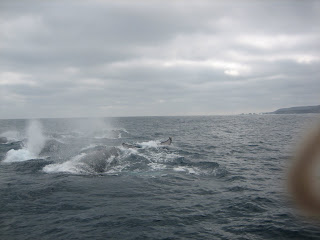
The whale-watching tour also included snorkeling and a bird-watching hike at Isla de la Plata. Before heading out on the boat, they gave us a piece of Palo Santo wood to chew on.
Apparently, the tourist stomach and the ocean waves don't get along. The locals claim that chewing Palo Santo wood will help one's stomach get over the rough water.
I don't know if it is true or not. But I chewed it anyway.
There might be some scientific proof to this, but I contend that the tourist is so preoccupied with the horrible taste and aftertaste of wood that they forget about their stomach issues.

As I mentioned above, part of the tour included a bit of snorkeling, which was very cool. Tons of fish. Tons of colors. Tons of fun.

There was one slight issue with my snorkeling equipment, though. Once I got into the water, I noticed that the breathing tube was letting a lot of water into my mouth. It wasn't entering from above. Apparently, the seal on the bottom of the tube wasn't completely sealed off.
I'm no expert on the whole snorkeling thing but I know that the tube is very important. So I swam back to the boat and explained this to the captain, who obviously doesn't quite understand the concept of customer service.
It would have been quite funny if he told me "no pasa nada," but he didn't. I figured it out, although it was not nearly as comfortable as I would have liked.

The other part of the tour included bird-watching on Isla de la Plata. The bird species on the island are similar to what you would see on the Galapagos Islands. There were two species of boobies (red-footed and blue-footed) along with frigates.
On the road to Puerto Lopez, you drive through one of the best-named cities in Ecuador: Jipijapa (pronounced Hippy Hoppa). Compared to its name, the town is a letdown. The area is probably most famous for its straw, which is used to make Panama Hats.
You are probably thinking one of two things after reading that line.
1. I already knew that.
2. I had no idea Ecuador had whales.
Well, trust me. Ecuador does have whales.
They follow the Pacific Ocean currents up the South American coast in search of warm water. Then they hang out off the Ecuadorian coast for a few months to mate before following the currents across the Pacific Ocean toward Asia.

The whales congregate near the town of Puerto Lopez, which is about eight hours up the coast from my site. Whale season is from June to September, and I decided to take a brief mental health break to go check out these mammals.
The pictures that I have here don't really do a good job of showing the sheer awesomeness of the whales, but they are what my camera would capture.

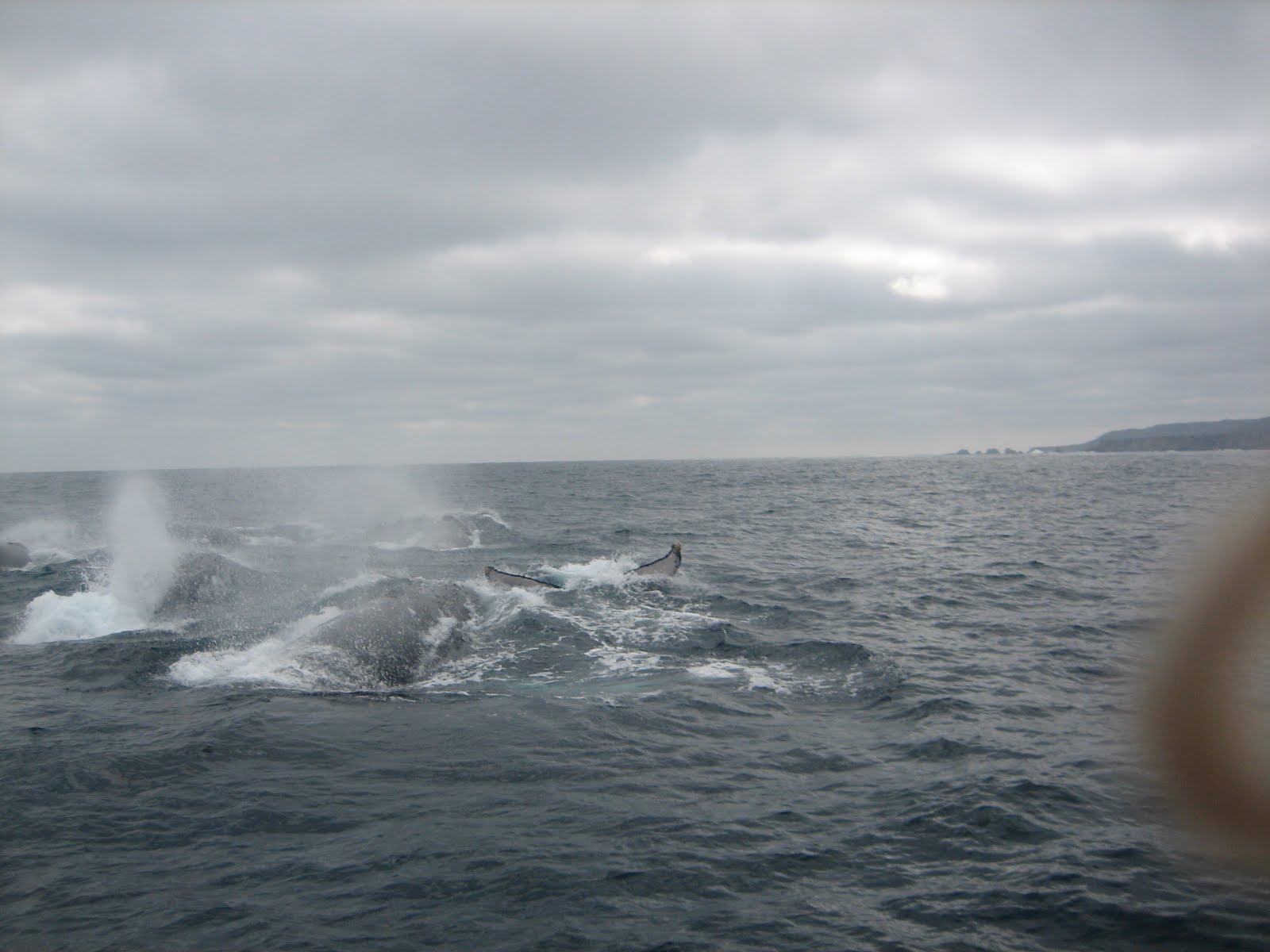
The whale-watching tour also included snorkeling and a bird-watching hike at Isla de la Plata. Before heading out on the boat, they gave us a piece of Palo Santo wood to chew on.
Apparently, the tourist stomach and the ocean waves don't get along. The locals claim that chewing Palo Santo wood will help one's stomach get over the rough water.
I don't know if it is true or not. But I chewed it anyway.
There might be some scientific proof to this, but I contend that the tourist is so preoccupied with the horrible taste and aftertaste of wood that they forget about their stomach issues.

As I mentioned above, part of the tour included a bit of snorkeling, which was very cool. Tons of fish. Tons of colors. Tons of fun.

There was one slight issue with my snorkeling equipment, though. Once I got into the water, I noticed that the breathing tube was letting a lot of water into my mouth. It wasn't entering from above. Apparently, the seal on the bottom of the tube wasn't completely sealed off.
I'm no expert on the whole snorkeling thing but I know that the tube is very important. So I swam back to the boat and explained this to the captain, who obviously doesn't quite understand the concept of customer service.
Ian: The tube is letting in too much water.
Captain: You are going to have to deal with it.
It would have been quite funny if he told me "no pasa nada," but he didn't. I figured it out, although it was not nearly as comfortable as I would have liked.

The other part of the tour included bird-watching on Isla de la Plata. The bird species on the island are similar to what you would see on the Galapagos Islands. There were two species of boobies (red-footed and blue-footed) along with frigates.
On the road to Puerto Lopez, you drive through one of the best-named cities in Ecuador: Jipijapa (pronounced Hippy Hoppa). Compared to its name, the town is a letdown. The area is probably most famous for its straw, which is used to make Panama Hats.
Tuesday, August 24, 2010
Drunk cattle?

Before I begin with the post, I will give you a very brief Spanish lesson. In Spanish, the word for drunk is borracho.
One of the more common shrubs in the dry tropical forest is borrachera.
The similarity is not by coincidence.
If eaten by livestock, the borrachera can cause a lack coordination, weakness, or apathy. (I guess it depends if the cow is a active drunk or a lazy drunk. Luckily, it doesn't say anything about the angry drunk cow. That could be bad.)
Unfortunately, I couldn't find a good YouTube, but people here like to laugh whenever someone mentions borrachera.

Supposedly, it doesn't have the same effects on humans, although it does have some medicinal uses. According to a book I found about the medicinal properties of local plants, one can use the borrachera to reduce fevers associated with respiratory and urinary infections. It can also apparently help combat ulcers, diabetes, and gonorrhea. If you have a toothache, the plant's fiber can reduce the pain.
The plant grows wild around here, displaying its pretty flower most of the year. In wet years, the flower is much bigger and the plant can be more than 10 meters long. In dry years, the plant and flower are much smaller.
Saturday, August 21, 2010
Reforestar: Lost without translation
The Spanish verb "reforestar" means "to reforest" in English.
To you, the Hearyoni reader who probably has a good grasp of the English language, this makes sense. Reforesting means "replant with trees; cover again with forest."
There used to be forest. For one reason or another, that forest isn't there anymore. So you are planting trees to restore the area to its forested state.
My problem with the Spanish word is that its intuitive meaning for an English speaker is lost on someone who doesn't understand English. "Forest" is not a word in Spanish.
When someone says they are "reforestando," they are typically just planting one or two species of trees that they plan on harvesting for timber in ten years. While it is important that they do plant trees, I wouldn't describe their activities as reforestation (especially because it is with the intent to deforest the land at some point). These are tree plantations, not forests.
The Spanish word for forest is "bosque."
When you ask someone here what a "bosque" is they will describe a forest - with a diversity of trees and animals. They don't think of single-specie tree plantations.
In my work at the tree nursery, I frequently find myself talking to clients about what they are planting. Most of the time, they come in and say they want to "reforestar." I ask them which species of trees they would like to plant. Most of the time it's teak - a tree that is not native to this part of the world that is only planting to harvest the wood.
The nursery also offers a variety of native tree species, and I ask the customers if they would like any of those. They say that they take too long to be worth anything.
If the Spanish word for "reforestation" related to the Spanish word "bosque" the perception of what it means to reforest might be a little different.
(I'm currently reading a book about the history of the Oxford English Dictionary, so the meaning of words is on my mind.)
To you, the Hearyoni reader who probably has a good grasp of the English language, this makes sense. Reforesting means "replant with trees; cover again with forest."
There used to be forest. For one reason or another, that forest isn't there anymore. So you are planting trees to restore the area to its forested state.
My problem with the Spanish word is that its intuitive meaning for an English speaker is lost on someone who doesn't understand English. "Forest" is not a word in Spanish.
When someone says they are "reforestando," they are typically just planting one or two species of trees that they plan on harvesting for timber in ten years. While it is important that they do plant trees, I wouldn't describe their activities as reforestation (especially because it is with the intent to deforest the land at some point). These are tree plantations, not forests.
The Spanish word for forest is "bosque."
When you ask someone here what a "bosque" is they will describe a forest - with a diversity of trees and animals. They don't think of single-specie tree plantations.
In my work at the tree nursery, I frequently find myself talking to clients about what they are planting. Most of the time, they come in and say they want to "reforestar." I ask them which species of trees they would like to plant. Most of the time it's teak - a tree that is not native to this part of the world that is only planting to harvest the wood.
The nursery also offers a variety of native tree species, and I ask the customers if they would like any of those. They say that they take too long to be worth anything.
If the Spanish word for "reforestation" related to the Spanish word "bosque" the perception of what it means to reforest might be a little different.
(I'm currently reading a book about the history of the Oxford English Dictionary, so the meaning of words is on my mind.)
Wednesday, August 18, 2010
A little bit about the Virgen del Cisne
In my previous post, I said that we are in the middle of the fiestas of the Virgen del Cisne. It has come to my attention that you, the hearyoni reader, might not be quite familiar with these festivities.
The main celebration and pilgrimage associated with these fiestas occurs in the province of Loja (east of El Oro). But because there is a large population of immigrants from Loja in El Oro, the fiestas are also commemorated here.
A little bit about the history of the fiestas.
El Cisne is a small town in the province of Loja founded in 1550. Later in the 16th century, the residents of El Cisne traveled to Quito to ask a sculptor for an image of the Virgin of Guadalupe to place in their sanctuary. With the statue in tow, the residents of El Cisne returned home. (FYI: We're not talking about the Virgin of Guadalupe from Mexico. This is the Virgin of Guadalupe from Caceres, Spain)
In 1594, a terrible drought hit the region. The authorities in Quito said that the residents should abandon the village and relocate. They took the statue with them. On their journey to their new village. From the moment they arrived in their new hamlet, it was beset by violent storms that uprooted trees, knocked over homes, and ruined their harvests.
The residents took this as a punishment from the Virgin for having removed her from El Cisne. They disobeyed the government's orders and returned to their hometown. In the end, the government decreed that the the town should always be populated.
It is very popular for people to make a pilgrimage on foot to El Cisne at this time of year. Some travel hundreds of kilometers, on foot through the Andes, to reach El Cisne. Others travel in bus.
For people who don't make the pilgrimage, they mark the occasion with several masses (I believe there is a mass for nine consecutive nights), a vaca loca, the burning of the castillo, bailes, and other traditional fiesta activities.
The main celebration and pilgrimage associated with these fiestas occurs in the province of Loja (east of El Oro). But because there is a large population of immigrants from Loja in El Oro, the fiestas are also commemorated here.
A little bit about the history of the fiestas.
El Cisne is a small town in the province of Loja founded in 1550. Later in the 16th century, the residents of El Cisne traveled to Quito to ask a sculptor for an image of the Virgin of Guadalupe to place in their sanctuary. With the statue in tow, the residents of El Cisne returned home. (FYI: We're not talking about the Virgin of Guadalupe from Mexico. This is the Virgin of Guadalupe from Caceres, Spain)
In 1594, a terrible drought hit the region. The authorities in Quito said that the residents should abandon the village and relocate. They took the statue with them. On their journey to their new village. From the moment they arrived in their new hamlet, it was beset by violent storms that uprooted trees, knocked over homes, and ruined their harvests.
The residents took this as a punishment from the Virgin for having removed her from El Cisne. They disobeyed the government's orders and returned to their hometown. In the end, the government decreed that the the town should always be populated.
It is very popular for people to make a pilgrimage on foot to El Cisne at this time of year. Some travel hundreds of kilometers, on foot through the Andes, to reach El Cisne. Others travel in bus.
For people who don't make the pilgrimage, they mark the occasion with several masses (I believe there is a mass for nine consecutive nights), a vaca loca, the burning of the castillo, bailes, and other traditional fiesta activities.
Tuesday, August 17, 2010
Live la vaca loca
They were celebrating the fiestas of the Virgen del Cisne last week in Arenillas last week.
Among other things, this meant that there would be the vaca loca. Now, I could use this space to explain the vaca loca. Or I could let the following YouTube video explain it.
It is kind of a "you can't have one without the other." Whenever they have a vaca loca, it is accompanied by the burning of the castillo.
Among other things, this meant that there would be the vaca loca. Now, I could use this space to explain the vaca loca. Or I could let the following YouTube video explain it.
It is kind of a "you can't have one without the other." Whenever they have a vaca loca, it is accompanied by the burning of the castillo.
Monday, August 16, 2010
It's starting to make sense

In recent blog posts, I have remarked about how culturally acceptable it is for people to go to the bathroom anywhere.
It might be out the window of the bus. It might be in the middle of a group of people waiting to get onto the bus. It might be on the wall that says "Don't pee on this wall."
For many months now, I have wondered where this freedom to go where you please comes from. I finally answered that question this weekend.
I took a day trip up to Zaruma, a colonial gold-mining town about two hours into the mountains from my site. It might be a relatively short journey, but it almost feels like a different country. The architecture is different (There is a distinct architectural style). The scenery is different (Mountains). The climate it different (Not hot). The pace of life is different (Not "in your face").
Given how different Zaruma is from my site, I was surprised by a statue in the central park.

That is a statue of a child going to the bathroom in the middle of the park. Even in a town as different as Zaruma, they glorify public urination (At least they make an art of it).
I asked some people around town why there is a statue of a kid peeing in the park. Apparently, it has been there for over a hundred years. They told me that it was brought over by some Europeans.
I did some further research on similar statues and discovered that there is a very famous statue in Brussels, Belgium. I imagine that the statue in Zaruma tractes its inspiration to that one.
I wonder how the presence of such a statue in the central park of a town such has Zaruma has affected the acceptability of public urination in Ecuador. If the statue was, in fact, donated by a European country or organization over a hundred years ago, people here might have thought that a statue of a person urinating in the central park accurately reflects cultural norms in that country.
If they associated cultured Europe with public urination, they might think that using the toilet or going out of site is the practice of bumpkins.
I only propose this hypothesis based upon my experiences in Ecuador. What people know of the United States they take from portrayals in popular culture. I have been asked if there is actually countryside in the United States (many think it all looks like New York). I have been asked if the United States is all night clubs and discos. I am still asked if I knew Michael Jackson.
Based on these experiences, I might be inclined to conclude that the statue has something to do with the propensity to pee in public.
Monday, August 09, 2010
Ian's weekly home appliance update
My fridge should just start its own blog.
It is breaking faster than I can blog about (granted, I am blogging relatively slowly).
We last left off the saga of my fridge a few of weeks ago. After the repairman brought his blow torch into my kitchen and borrowed my gas tank, she was up and running again.
I was happy. I asked the repairman if he thought my fridge would break anytime soon.
He said he didn't think so.
Have I previously mentioned on this blog how Ecuadorians don't like to say "no" and are very indirect?
Well, if I haven't, I will do so now.
They don't really like to say "no" to you and are very indirect. When he told me that my fridge would not break very soon, I took that to mean that my fridge should work well for the rest of my service.
I guess we had different understandings of what the word "soon" means.
So when I came knocking on his door July 31st, he didn't look surpised to see me. I explained the problem, which was quite similar to the problem it was experiencing two weeks earlier.
He said he would come by the next day or so to check it out. Obviously, it took him about three days. He checked it out and confirmed what I had suspected.
It was broken with a similar problem. I asked him if it was worth continuing to go through this same hassle, if it was actually possible to have this thing fixed and functioning for the rest of my service.
He said that it should be possible and that he would take it to his repair shop. Except that he couldn't do it very soon because he was going to visit his daughter who is in university.
So I waited five days for him to come back. I asked him if he could come by my house, and he told me he'd be by Monday morning at 8:00 a.m. By 9:00 a.m., I was beginning to doubt that he would show up.
I headed over to his house and caught him as he was leaving. Apparently, he had to go file complaints with the electrical company and the water company and had decided to delay visiting my house until the afternoon.
I told him that wasn't going to work because I wasn't going to be home for the rest of the day, which was a true story. By now, I think he understood that I would like my refrigerator repaired. We moved the fridge from my house to his.
Apparently, it will be ready on Thursday.
It is breaking faster than I can blog about (granted, I am blogging relatively slowly).
We last left off the saga of my fridge a few of weeks ago. After the repairman brought his blow torch into my kitchen and borrowed my gas tank, she was up and running again.
I was happy. I asked the repairman if he thought my fridge would break anytime soon.
He said he didn't think so.
Have I previously mentioned on this blog how Ecuadorians don't like to say "no" and are very indirect?
Well, if I haven't, I will do so now.
They don't really like to say "no" to you and are very indirect. When he told me that my fridge would not break very soon, I took that to mean that my fridge should work well for the rest of my service.
I guess we had different understandings of what the word "soon" means.
So when I came knocking on his door July 31st, he didn't look surpised to see me. I explained the problem, which was quite similar to the problem it was experiencing two weeks earlier.
He said he would come by the next day or so to check it out. Obviously, it took him about three days. He checked it out and confirmed what I had suspected.
It was broken with a similar problem. I asked him if it was worth continuing to go through this same hassle, if it was actually possible to have this thing fixed and functioning for the rest of my service.
He said that it should be possible and that he would take it to his repair shop. Except that he couldn't do it very soon because he was going to visit his daughter who is in university.
So I waited five days for him to come back. I asked him if he could come by my house, and he told me he'd be by Monday morning at 8:00 a.m. By 9:00 a.m., I was beginning to doubt that he would show up.
I headed over to his house and caught him as he was leaving. Apparently, he had to go file complaints with the electrical company and the water company and had decided to delay visiting my house until the afternoon.
I told him that wasn't going to work because I wasn't going to be home for the rest of the day, which was a true story. By now, I think he understood that I would like my refrigerator repaired. We moved the fridge from my house to his.
Apparently, it will be ready on Thursday.
Saturday, August 07, 2010
The back of the bus
The ride from Machala to my site take a bit more than an hour, and one should never be surprised by anything that happens on the bus. (No rules!!!!!)
The bus employee might decides to arbitrarily change the fare. Clowns might hop on the bus to do a comic routine. A one-toothed man might strum his one-string guitar. Another guy might be hawking the medicinal benefits of noni.
Sometimes, these occur simultaneously.
I would say that you should expect the unexpected, but I don't know if it's possible to expect something unexpected to happen because if you had expected it to happen than it wouldn't be unexpected.
Last week, on the ride back to my site from Machala, I was sitting in the back of the bus with another volunteer. About ten minutes into the hour-long ride, I hear some commotion across the aisle.
A six-year old and his mom are sitting there. He was whining a little bit and squirming around. By now, this commotion had drawn the attention of everybody else sitting nearby.
The mom lifts her child so he is standing on the window seat and props open the window. And he starts peeing.
Everyone in the area let out a collective moan.
I was equally disgusted by the fact that this kid's mom thought it was fine for her son to piss out the window. What I thought was interesting was that everybody else found that weird.
Based on my experiences, it is acceptable for children in Ecuador to pee toward the public. Instead of walking a few more meters to get to a bathroom or just cozying up to a wall, some Ecuadorian parents encourage their children to pee into the street. At least, this child was aiming away from the aisle of the bus.
The kid didn't even have to hold it in, at this time. He had another, just as convenient, option for going to the bathroom - actually going to the bathroom. He was sitting across the aisle from the bathroom door. His mom could have just as easily moved her child across the aisle and into the bathroom.
But then again, common logic doesn't always apply on the bus.
The bus keeps on rolling down the road. Another half hour passes, and that same child starts making a scene again. He doesn't have the "I have to go to the bathroom" face. He is showing more of a "I'm about to blow chunks" face.
Then came the dry heaves. Obviously, his mom told him not to vomit in her direction. She urged him to aim into my lap. Luckily, the heaves stayed dry until they got off the bus.
While all of this is happening, a couple sitting in the last row, one row behind the mother and son, seem completely oblivious to everything. As the child is pissing out the window or on the verge of vomitting, the two lovebirds in the back seat are too obsessed with each other to notice. They were making out for pretty much the entire bus ride.
And I'm sitting directly two feet away from all of this.
The only reaction I could think of is "asi es la vida" and go back to trying to read my book.
The bus employee might decides to arbitrarily change the fare. Clowns might hop on the bus to do a comic routine. A one-toothed man might strum his one-string guitar. Another guy might be hawking the medicinal benefits of noni.
Sometimes, these occur simultaneously.
I would say that you should expect the unexpected, but I don't know if it's possible to expect something unexpected to happen because if you had expected it to happen than it wouldn't be unexpected.
Last week, on the ride back to my site from Machala, I was sitting in the back of the bus with another volunteer. About ten minutes into the hour-long ride, I hear some commotion across the aisle.
A six-year old and his mom are sitting there. He was whining a little bit and squirming around. By now, this commotion had drawn the attention of everybody else sitting nearby.
The mom lifts her child so he is standing on the window seat and props open the window. And he starts peeing.
Everyone in the area let out a collective moan.
I was equally disgusted by the fact that this kid's mom thought it was fine for her son to piss out the window. What I thought was interesting was that everybody else found that weird.
Based on my experiences, it is acceptable for children in Ecuador to pee toward the public. Instead of walking a few more meters to get to a bathroom or just cozying up to a wall, some Ecuadorian parents encourage their children to pee into the street. At least, this child was aiming away from the aisle of the bus.
The kid didn't even have to hold it in, at this time. He had another, just as convenient, option for going to the bathroom - actually going to the bathroom. He was sitting across the aisle from the bathroom door. His mom could have just as easily moved her child across the aisle and into the bathroom.
But then again, common logic doesn't always apply on the bus.
The bus keeps on rolling down the road. Another half hour passes, and that same child starts making a scene again. He doesn't have the "I have to go to the bathroom" face. He is showing more of a "I'm about to blow chunks" face.
Then came the dry heaves. Obviously, his mom told him not to vomit in her direction. She urged him to aim into my lap. Luckily, the heaves stayed dry until they got off the bus.
While all of this is happening, a couple sitting in the last row, one row behind the mother and son, seem completely oblivious to everything. As the child is pissing out the window or on the verge of vomitting, the two lovebirds in the back seat are too obsessed with each other to notice. They were making out for pretty much the entire bus ride.
And I'm sitting directly two feet away from all of this.
The only reaction I could think of is "asi es la vida" and go back to trying to read my book.
Monday, August 02, 2010
The guarantee fairy
I lived on my own for about eight months before I got a blender. I didn't really think I was missing much.
One of the nearby volunteers left, and he left behind a blender. Who would turn down a free blender?
I inherited the appliance and quickly realized what I had been missing. It has really made pasta sauce and shakshuka-making much quicker. I have started making hummus on a regular basis. Although I like to eat my fruits whole, I have learned to appreciate fresh juice on occasion.
Well, Friday afternoon, I overestimated the power of my inherited blender while trying to make a batch of hummus. The motor stopped functioning.
The next day, I took it into the local electrician, who told me that it would cost more to fix the blender than to buy a new one.
I was already planning on going to Huaquillas Saturday afternoon anyway, so I just added "new blender" to my shopping list. (Huaquillas is the town on the border between Ecaudor and Peru. You can pretty much find anything there, including one of the finest statues in Ecuador.)
Blenders come in a few varieties - nice and economical. The nice blender will run you about 50 bucks and is a decent blender. You can find an economical one for about 15. I was looking for something on the nicer end of economical (something would last me for eight months).
When you are searching for something in this price range, you must be wary of vendors trying to convince you that their cheap, bad blender is just a cheap blender. And I don't have to tell you that the type of people you find working at Latin American border town electronic stores are not the most honest salesmen in the world.
After checking into a few different stores, I found a shop tucked away on the main street. The salesman was wearing a button-down shirt with the top three buttons undone. He was finishing up a lunch of soup, chicken, and a few pieces of tomato while watching a soccer game on one of the TVs he was also selling. He was also sweating profusely.
He had a few different models of blender on top of his display case. You had the top-of-the-line model, the end-of-the-line model (which looked a lot like my blender that had broke), and a third style that looked a little bit better.
The brand name was Forever, which I really enjoyed (I couldn't find any Ericksons). After engaging in a bit of bargaining, I was able to get a twenty percent discount. Then I explained to the salesman why I was in the market for a new blender.

It was at this moment that I thought of Tommy Callahan.
For some reason, I thought that this blender, whether or not it breaks, was definitely a step up from the one that had recently crapped out on me. I also have a guarantee from this vendor, which could mean one of two things.
1) It's a quality product and lasts me for the rest of my service.
2) At some point in the next eight months, the blender breaks and I take it back to the vendor who will either help me fix it or laugh in my face.
The first one is definitely preferable, but the second one will obviously provide quality blog material.
When the salesman was pitching the blender, he emphasized how one can use this smaller attachment to make mustard and mayonnaise.

I saw the utility in this attachment for other sauces, but who makes mustard or mayonnaise?
I have been making homemade tahini for the hummus and definitely see the potential in the smaller attachment for that.
One of the nearby volunteers left, and he left behind a blender. Who would turn down a free blender?
I inherited the appliance and quickly realized what I had been missing. It has really made pasta sauce and shakshuka-making much quicker. I have started making hummus on a regular basis. Although I like to eat my fruits whole, I have learned to appreciate fresh juice on occasion.
Well, Friday afternoon, I overestimated the power of my inherited blender while trying to make a batch of hummus. The motor stopped functioning.
The next day, I took it into the local electrician, who told me that it would cost more to fix the blender than to buy a new one.
I was already planning on going to Huaquillas Saturday afternoon anyway, so I just added "new blender" to my shopping list. (Huaquillas is the town on the border between Ecaudor and Peru. You can pretty much find anything there, including one of the finest statues in Ecuador.)
Blenders come in a few varieties - nice and economical. The nice blender will run you about 50 bucks and is a decent blender. You can find an economical one for about 15. I was looking for something on the nicer end of economical (something would last me for eight months).
When you are searching for something in this price range, you must be wary of vendors trying to convince you that their cheap, bad blender is just a cheap blender. And I don't have to tell you that the type of people you find working at Latin American border town electronic stores are not the most honest salesmen in the world.
After checking into a few different stores, I found a shop tucked away on the main street. The salesman was wearing a button-down shirt with the top three buttons undone. He was finishing up a lunch of soup, chicken, and a few pieces of tomato while watching a soccer game on one of the TVs he was also selling. He was also sweating profusely.
He had a few different models of blender on top of his display case. You had the top-of-the-line model, the end-of-the-line model (which looked a lot like my blender that had broke), and a third style that looked a little bit better.
The brand name was Forever, which I really enjoyed (I couldn't find any Ericksons). After engaging in a bit of bargaining, I was able to get a twenty percent discount. Then I explained to the salesman why I was in the market for a new blender.

Salesman: If this blender breaks, you can bring it to me.
Ian: What will you do if I bring it to you?
Salesman: I will get it fixed at no charge (I thought he was going to tell me "laugh in your face")
Ian: So, you guarantee that this blender will not break on me.
Salesman: If it breaks, you bring it back here with the receipt.
It was at this moment that I thought of Tommy Callahan.
Tommy: Let's think about this for a sec, Ted. Why would somebody put a guarantee on a box? Hmmm, very interesting.
Customer: Go on, I'm listening.
Tommy: Here's the way I see it, Ted. Guy puts a fancy guarantee on a box 'cause he wants you to feel all warm and toasty inside.
Customer: Yeah, makes a man feel good.
Tommy: 'Course it does. Why shouldn't it? Ya figure you put that little box under your pillow at night, the Guarantee Fairy might come by and leave a quarter, am I right, Ted?
[chuckles until he sees that Ted is not laughing]
Customer: [impatiently] What's your point?
Tommy: The point is, how do you know the fairy isn't a crazy glue sniffer? "Building model airplanes" says the little fairy; well, we're not buying it. He sneaks into your house once, that's all it takes. The next thing you know, there's money missing off the dresser, and your daughter's knocked up. I seen it a hundred times.
Customer: But why do they put a guarantee on the box?
Tommy: Because they know all they sold ya was a guaranteed piece of shit. That's all it is, isn't it? Hey, if you want me to take a dump in a box and mark it guaranteed, I will. I got spare time. But for now, for your customer's sake, for your daughter's sake, ya might wanna think about buying a quality product from me.
Customer: [pause] Okay, I'll buy from you.
Tommy: Well, that's...
Tommy, Richard Hayden: ...What?
For some reason, I thought that this blender, whether or not it breaks, was definitely a step up from the one that had recently crapped out on me. I also have a guarantee from this vendor, which could mean one of two things.
1) It's a quality product and lasts me for the rest of my service.
2) At some point in the next eight months, the blender breaks and I take it back to the vendor who will either help me fix it or laugh in my face.
The first one is definitely preferable, but the second one will obviously provide quality blog material.
When the salesman was pitching the blender, he emphasized how one can use this smaller attachment to make mustard and mayonnaise.

I saw the utility in this attachment for other sauces, but who makes mustard or mayonnaise?
I have been making homemade tahini for the hummus and definitely see the potential in the smaller attachment for that.
Subscribe to:
Posts (Atom)

